
The Ashton Legacy
Looking Ahead to the Next Hundred Years

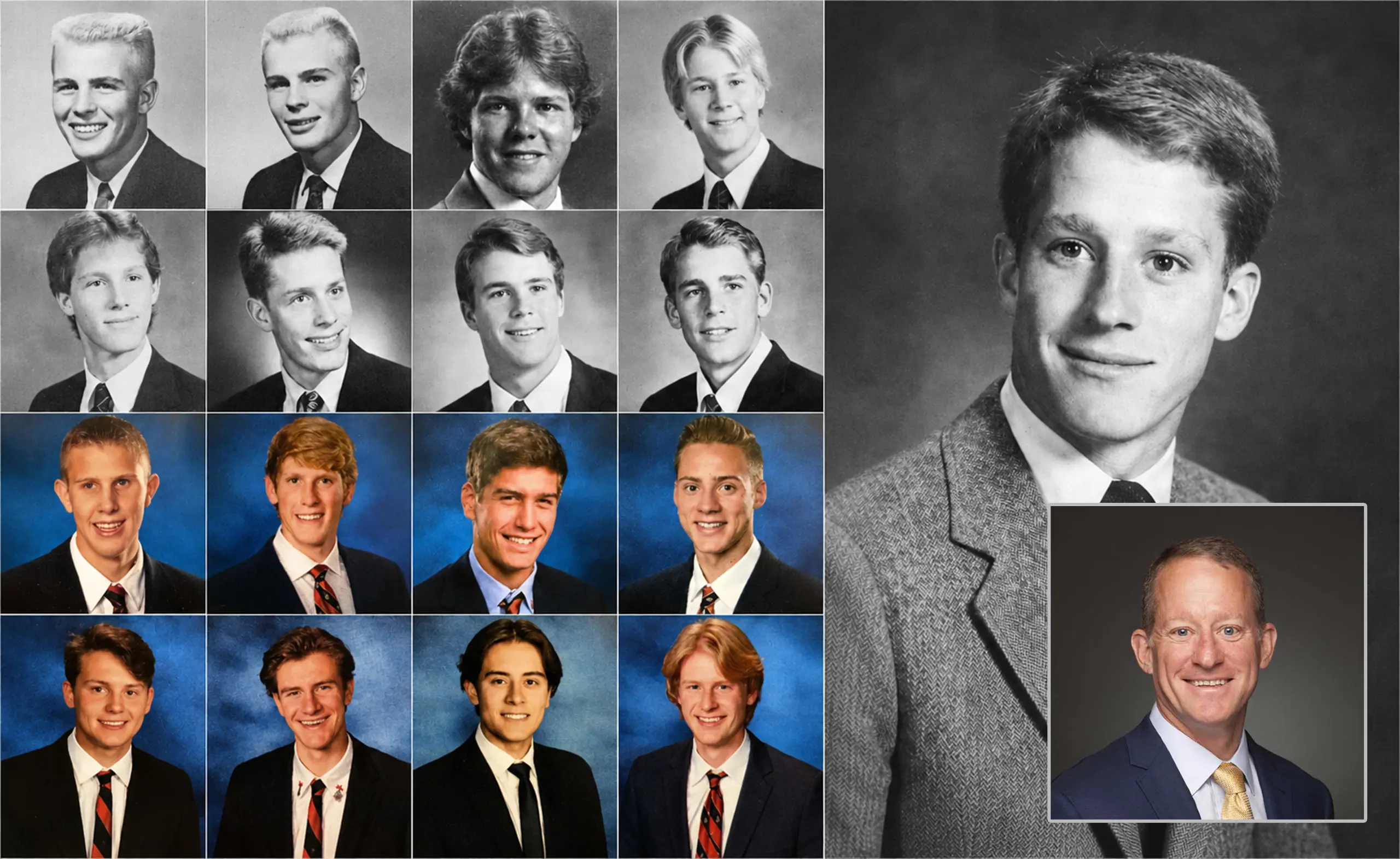
For John Ashton ’87, the connection to Brophy is in his blood. Seventeen members of the Ashton family have walked the halls of Brophy, a lineage beginning in 1959 with his father (Lynn) and uncle (Tony) and continuing to his nephews, Aden Ashton ’21 and Everett Ashton ’21. Today, as Chair of the Board of Trustees, John Ashton views the school through a lens of both deep gratitude and strategic responsibility.
“I’ve had a very positive and fruitful life, and Brophy was a significant contributing factor to that,” he says. “More importantly, I believe in the caliber of students that graduate Brophy — the caliber of human beings that come out of Brophy — and their capacity to be positive contributors to society. To me, I look at helping Brophy as an investment in society.”
Building on a Strong Foundation
Ashton has seen the school grow and adapt significantly since his graduation, and he is inspired by how the school has expanded its reach to develop the “whole person” in increasingly intentional ways. He observes that while the Brophy spirit remains constant, the actual day-to-day life of a student has become even more vibrant, with students being actively encouraged to step outside their comfort zones. “I think they are genuinely interested in the well-being of fellow students,” Ashton observes. “You have great students who want to learn, and they actively try to cross-pollinate and bring others into their clubs and activities in a way that you wouldn’t necessarily expect of high schoolers.”
“The experience at Brophy in 1959, according to my dad and his twin brother, was awesome,” he continues. “The experience at Brophy in 1987 and the ’80s in general, when my brothers, cousins and I went through here, was awesome. And it’s even better today.”
Brophy President Bob Ryan sees Ashton’s history with the institution as an asset. “As Brophy prepares to enter its second century, it is fitting that we are guided by a leader whose family has been so deeply woven into the fabric of our first,” he says. “John Ashton’s connection to this school spans generations, and his stewardship reflects both a profound respect for our history and a clear commitment to our future.”
Moving forward, Ashton and the Board of Trustees are focused on a reimagined vision of the physical campus, where many iconic buildings have been an integral part of campus since its founding.
“A classroom size and configuration one hundred years ago was very different from what’s ideal for the learning environment today,” Ashton explains. “It’s no longer a Jesuit priest standing up in front of a classroom and lecturing. It’s now much more collaborative, much more engaging, and our spaces should reflect that.”
However, Ashton is quick to point out that buildings are only part of the equation, and that reinforcing Brophy’s Jesuit identity is even more important — the “first and foremost principle” to be fostered as the school continues to grow. In his mind, physical renovation is about providing the infrastructure to support the “Men for Others” mission in a rapidly changing world.
A Shared Investment
As Chair, Ashton describes the board’s role as providing “governance and strategy,” ensuring the mission remains the focus of every decision. But he remains, at his core, an alumnus who simply loves the school. When he thinks back to his student days, he remembers impactful teachers like Fr. Anton J. Renna, S.J. and Mr. Dan Heim, as well as the lifelong friendships that began on campus.
“Just like Brophy offers a bunch of opportunities for students to flourish in different ways, there are a bunch of opportunities for alumni to get involved,” Ashton says. “You can come to the alumni events. You can participate in classes. You can volunteer. There are a ton of opportunities as an alumni to come back and contribute.”
Ultimately, his own commitment, and that of all 17 Ashtons who have graduated Brophy, is focused on ensuring the same quality of formation is available to the next generation of students. “People say, ‘Why do you contribute to Brophy?’... It’s a thank you for what Brophy did for me, and it’s an investment in society and in the future,” Ashton says. “If I could go back and relive one year of my life, it would be junior year of high school at Brophy. I’m happy to be a part of it still.”
This article appeared in the Spring / Summer 2026 of the Brophy Impact Report. To see more stories like this, visit Brophy Publications.
Read More |
-
 Mon, 31 Aug 2026
Freshman Retreat Details & Expecations
-
 Wed, 20 May 2026
ASC: Where are they now? Matthew Williams
-
 Wed, 20 May 2026
Explore Brophy's First Impact Report